20 Calming Home Office Ideas for a Peaceful Workday

Calming home office ideas for a peaceful workday start with subtraction, not shopping. Most home offices feel stressful for the same few reasons: harsh light, a cluttered desk, cables everywhere, and nowhere for your eyes to rest. Fix those four things first, and the room starts working for you. This guide gives you 20 practical ideas, with the sizes and small habits that make each one last past the first week.
Before you buy anything, sit at your desk and look around for one full minute. Notice what pulls your attention: a pile of papers, a tangled charger, a bare wall, a chair that hurts after an hour.
1. Put the desk beside the window, not against a blank wall
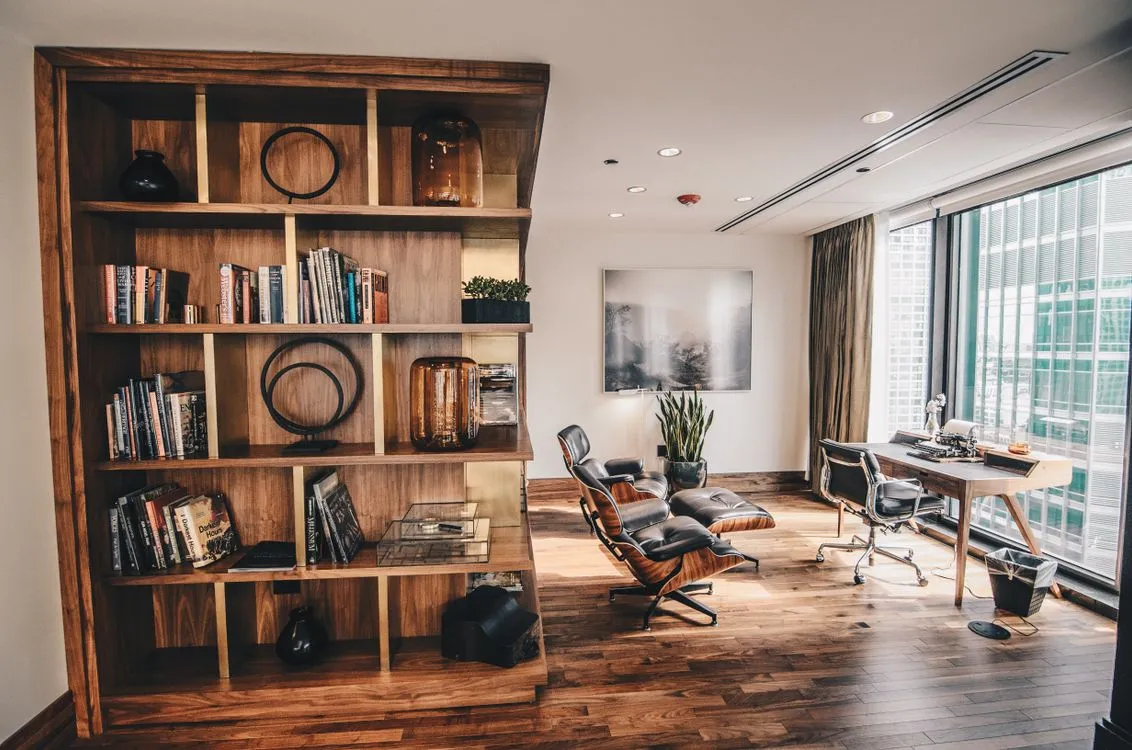
Natural light does more for focus and mood than almost any purchase you can make for a home office. Place your desk facing the window, or perpendicular to it, so daylight falls across your work instead of straight into your eyes. If the afternoon sun is too strong, a sheer curtain softens it without making the room dark.
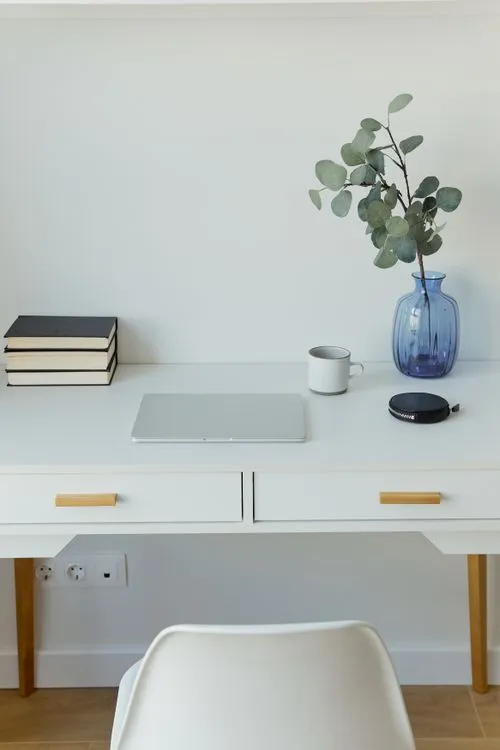
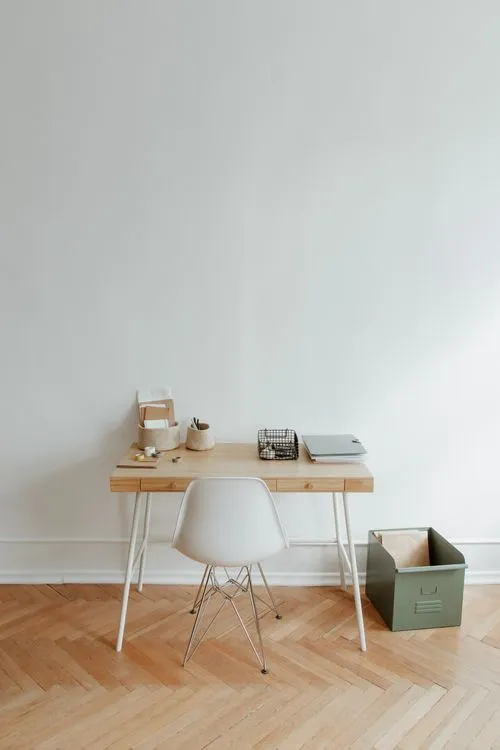
2. Choose one simple white desk and keep it mostly clear
A plain desk with clean lines and two shallow drawers sets a calm tone for the whole room. Light finishes, like white or pale oak, feel more open than dark stained wood, especially in a small room. Only the items you use every day stay on the surface.

3. Build a plant corner you can see from your chair
A small cluster of plants in one corner brings life into the room without taking over your desk. Mix heights: a tall snake plant on the floor, plus a pothos on a low stand. Put the group where you can glance at it during breaks, since even a short look at greenery helps reset your focus. For more plant styling, see these indoor plant wall decor ideas that bring your walls to life.
4. Keep a note wall, but limit it to a few cards
A small board or a few cards on the wall gives you a place for reminders without letting notes take over the room. The limit matters: pick five cards at most, one per current project, and remove a card the day its task is done.

5. Dress the room in one neutral palette
Soft neutrals, like warm white, light gray, or pale sage, change how calm a room feels almost overnight. Extend the palette to your accessories, pen holders, trays, and file boxes in the same muted tones, so nothing on the desk shouts for attention.
6. End the day with a two minute clear desk ritual
Close the laptop, stack the papers, and put the mug in the kitchen. That tiny ritual tells your brain the workday is over, and it means you start tomorrow at a clean desk instead of yesterday’s mess. A desk left cluttered at 6 pm is the first thing you see at 9 am, and it sets the tone before you have even sat down.
7. Hide clutter in woven baskets, not open piles
Woven baskets in seagrass or rattan give papers, cables, and supplies a home out of sight. Place one under the desk for chargers and one on a shelf for notebooks, and label them if you have several, so you are not digging through all of them to find one item. Choose a size that fits what you own, since an overfilled basket looks messy again within a week.
8. Use one wooden organizer, not five small trays
A single wooden tray with a few compartments keeps pens, sticky notes, and small supplies contained instead of scattered. Light wood tones fit a neutral, calming scheme, and one organizer is easier to keep tidy than a collection of cups and dishes. Keep only daily items in it, and store the rest in a drawer.
9. Hang linen curtains to soften hard window edges
Soft linen curtains in off white, oatmeal, or light gray soften the hard edges of a window and add gentle texture. Hang them slightly higher than the frame to make the ceiling feel taller, and let them filter light rather than block it. If your window faces strong afternoon sun, a slightly heavier linen blend diffuses the glare without needing to close the curtains fully.
10. Put desk plants at eye level, edited, not jungle
Plants work best when they sit where you actually look: beside the monitor, on a shelf at eye height, or on a small stand next to the desk. The trick is editing. Three healthy plants in good pots look calmer than twelve crowded ones competing for light and water.

11. Hide every cable in one box under the desk
Tangled cords are one of the biggest visual stressors in a home office, even if you do not notice them consciously. Bundle loose cords with velcro ties, then place the power strip in a neutral cable box under or behind the desk. This idea adds no visible decor at all, but it removes a constant source of visual noise.
12. Frame your screen with greenery, not with clutter
If your desk faces a wall, let plants frame the screen instead of papers and boxes. A tall plant on each side of the monitor, or a shelf of trailing plants above it, turns the wall into something pleasant to look at during video calls and thinking breaks. Keep the plants trimmed so they never block the screen or drop leaves onto the keyboard.

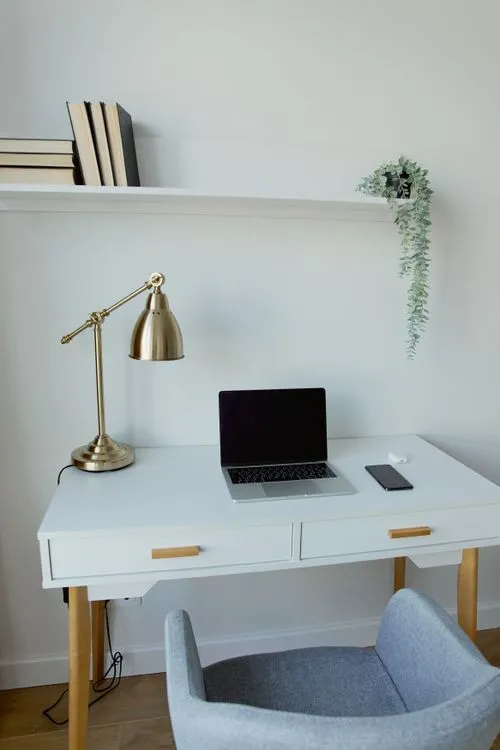
13. Add two floating shelves, styled lightly
Two or three floating shelves above the desk give you storage and display space without the bulk of a full bookcase. Style each one lightly: a plant, a stack of three books, one decorative object, and plenty of open space between items. Choose a light wood tone that matches your desk.
14. Layer light: one pendant, one desk lamp, no overhead glare
Overhead ceiling lights alone make most home offices feel harsh. Layer instead: a pendant or a soft ceiling light for general glow, plus a desk lamp with a warm bulb for focused work. Position the desk lamp to one side so it lights your papers without reflecting on the screen.

15. Add a second seat for reading and phone calls
A single comfortable chair in the corner gives you a spot to read, take a call, or think away from your screen. Choose soft, neutral upholstery, add a small side table and a throw, and place the chair at an angle to the desk so the two areas feel distinct. These simple reading nook ideas you can set up today use the same one good chair rule.
16. Make a warm lamp and tea ritual your afternoon reset
At the same time each afternoon, switch on a warm lamp and make a cup of tea or coffee. The ritual gives your mind a brief pause from screen time, which helps reset focus before the last stretch of work. For a matching setup, see these clever coffee station ideas for small spaces.

17. Lay a soft rug under the desk chair
A soft, low pile rug under your desk chair changes the feel of the whole room, especially over hardwood or tile. Choose a neutral tone that will not show chair marks too easily, and size it so it extends a foot or two beyond the desk and chair area. A rug also absorbs sound, which makes a room feel quieter during the workday.
18. Layer lamps and hang one framed print, not a gallery wall
One framed print, hung at eye level where you see it from your chair, gives the room a focal point without the visual noise of a full gallery wall. Pair it with layered lamps: a table lamp with a fabric shade for soft light, plus a small directional lamp for evening work. Keep the wall around the print empty, so the eye rests there instead of scanning a dozen frames.

19. Pick a chair with real back support, then make it pretty
Comfort comes before looks with an office chair, because a chair that hurts after an hour will ruin every other calming idea in the room. Look for adjustable height, lumbar support, and armrests that let your shoulders relax. Once the support is right, add a neutral cushion or a throw over the back so it fits the room’s palette.
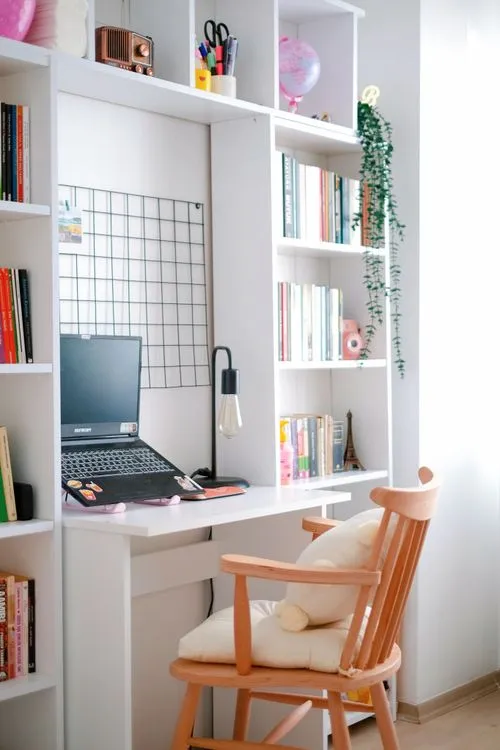
20. Build a bookshelf desk nook for small rooms
In a small room or a shared space, a desk tucked between bookshelves creates a defined office without a separate room. The shelves hold books, supplies, and a plant or two, while the desk itself stays clear because everything has a shelf to go back to. Keep the shelves lightly styled, with books grouped by size and one open shelf left partly empty, so the nook reads as calm rather than crammed.
How to choose: calming home office ideas for a peaceful workday
If you only have a weekend, do three things in this order. First, move the desk near the window and fix the lighting, since light affects every hour you spend in the room. Second, hide the cables and give every item a basket, drawer, or shelf, since visible clutter is the fastest way a calm room turns stressful. Third, add one or two plants you can keep alive, and put them where you see them from your chair.
Frequently asked questions
What is the cheapest way to make a home office feel calmer?
Move the desk near the window, clear everything off its surface except daily items, and hide the cables in one box.
How many plants should a home office have?
Three to five healthy plants is plenty for most rooms. Put them where you see them from your chair, water on a set day, and replace any plant that is struggling.
What color should a calming home office be?
Warm white, light gray, pale sage, or soft beige all work well, with furniture and accessories in the same muted family.
Is a white desk practical for daily work?
Yes, if you keep it mostly clear and wipe it once a week.
Do I need a separate room for a calm home office?
No. A desk beside a window, a bookshelf nook, or a well planned corner can work, as long as it has good light, hidden storage, and a chair with real back support.
Conclusion
A peaceful workday does not need a perfect room, it needs a room that stops getting in your way. Start with light, give everything a home, add a plant or two you can keep alive, and protect the end of the day with a two minute tidy.




2 Comments